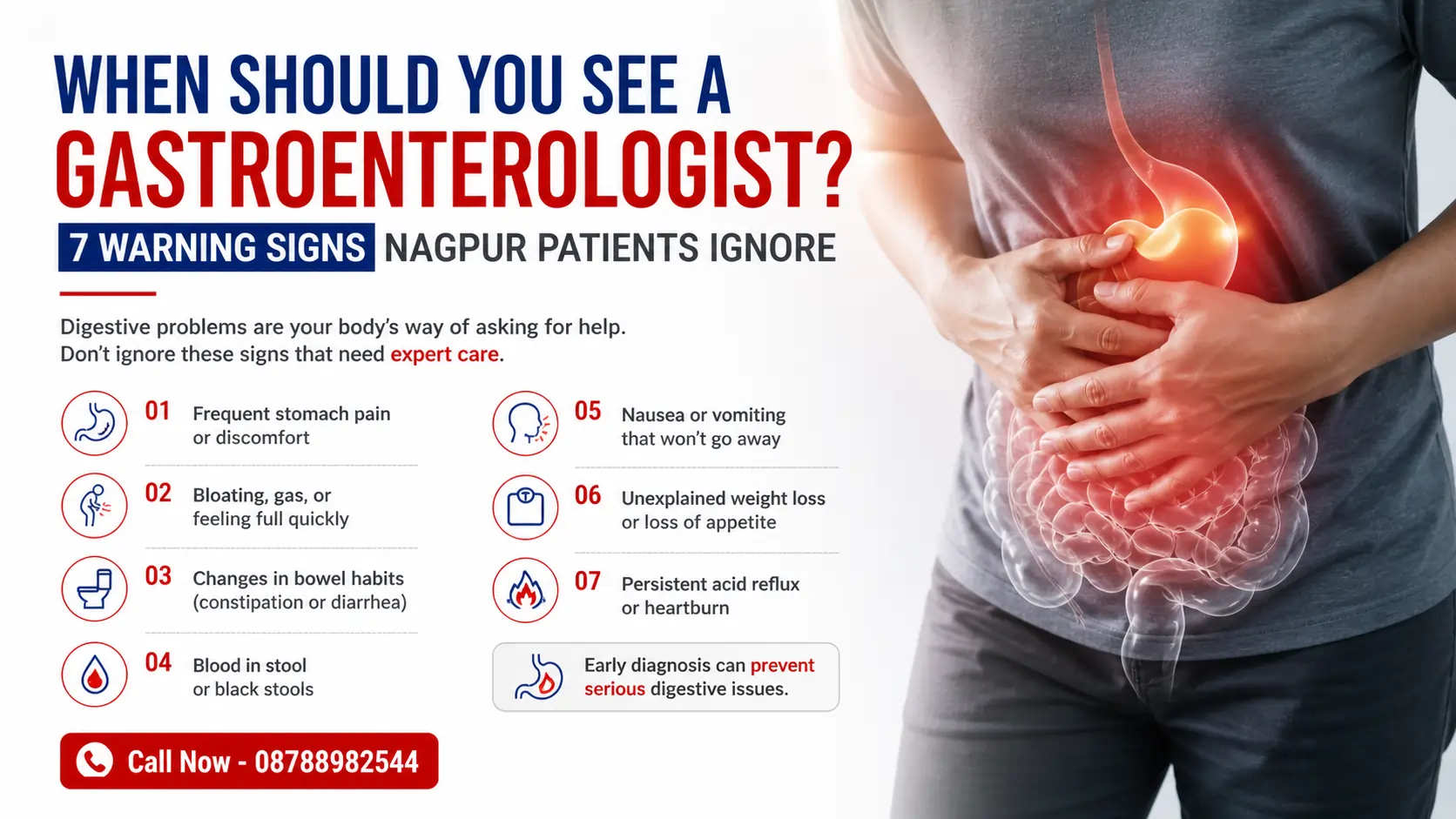
When Should You See a Gastroenterologist? 7 Warning Signs Nagpur Patients Ignore
A few weeks ago, a 38-year-old man walked into my clinic after typing “gastroenterologist near me” late at night. He had been dealing with acidity for almost a year. Tablets from the chemist helped for a few days… then the burning came back. By the time he reached me, his symptoms had already progressed.
I see this pattern almost every day in Nagpur.
In this article, I’ll walk you through the warning signs that people often ignore—and when you should actually consult a specialist.
That “Simple Acidity” That Won’t Go Away
Most people assume acidity is just a food problem. Too much spicy food, late dinners, maybe stress.
But when someone tells me, “Doctor, I’ve had this burning for months,” I stop thinking of it as simple acidity.
In my clinic at Pioneer Nursing Home, I often see patients who’ve been self-medicating for weeks. The problem is not the acidity—it’s the delay. Persistent reflux can point to deeper issues like gastritis, ulcers, or even early changes in the food pipe.
Nagpur’s food culture—late-night snacks, spicy curries, tea multiple times a day—doesn’t help. But lifestyle alone is rarely the full story.
If your acidity keeps coming back despite medication, that’s your signal.
Unexplained Weight Loss or Loss of Appetite
This one worries me the most.
A patient once casually mentioned, “Doctor, I’ve lost 6 kilos, but I’m not dieting.” He thought it was a good thing.
It wasn’t.
When your body starts losing weight without effort, especially along with poor appetite, it can be a sign that something inside isn’t functioning properly. I always investigate this thoroughly—liver, pancreas, intestines.
My research work on liver diseases, including fatty liver and genetics, has taught me one thing: early symptoms are often subtle. By the time they become obvious, the condition may already be advanced.
Don’t ignore unexplained changes in your body.
Frequent Bloating and Gas That Affects Daily Life
Gas is common. Let’s be honest—everyone in Nagpur complains about it at some point.
But there’s a difference between occasional bloating and daily discomfort.
If your stomach feels tight after every meal, if your clothes feel tighter by evening, if you avoid social outings because of discomfort—that’s not normal.
I often diagnose conditions like IBS, food intolerances, or gut motility disorders in such patients. These are manageable, but only when properly evaluated.
Living with constant bloating is not something you have to “adjust” to.
Blood in Stool or Black-Colored Stool
This is something patients hesitate to talk about.
They’ll say, “Doctor, it happened once… I thought it was piles.”
Maybe it is. But maybe it isn’t.
Blood in stool, or black-colored stool, can indicate bleeding somewhere in the digestive tract. It could be from piles, yes—but also from ulcers, infections, or more serious conditions.
I’ve performed countless colonoscopies where patients came in late, assuming it was something minor.
If you see blood—even once—get it checked. Don’t wait for it to happen again.
Persistent Constipation or Sudden Change in Bowel Habits
Your bowel pattern is your body’s daily report card.
If someone tells me they’ve been constipated for months, or suddenly started having loose motions without reason, I pay attention.
A sudden change—especially after age 40—needs evaluation.
In Nagpur, many people rely on home remedies or over-the-counter powders. They work temporarily, but they don’t address the cause.
Sometimes, it’s just diet. Sometimes, it’s something more.
Difficulty Swallowing or Food Getting Stuck
This is often ignored until it becomes severe.
Patients say, “Doctor, food feels like it’s getting stuck sometimes.” Then they adjust—eat slower, drink more water.
But difficulty swallowing is not something to ignore.
It can be related to inflammation, narrowing of the food pipe, or other structural issues. Endoscopy helps us understand exactly what’s happening.
If swallowing feels different than before, listen to that signal.
Recurrent Vomiting or Nausea
Occasional nausea is fine. But repeated vomiting, especially without clear reason, is not.
I’ve seen patients who thought it was “just acidity” or “heat.” But repeated vomiting can indicate infections, ulcers, liver issues, or even blockages.
Your body doesn’t keep reacting like that without a cause.
Dr. Amin’s Clinical Note
Most people wait too long. That delay is the real problem.
By the time they search for the “best gastroenterologist in Nagpur,” they’ve already tried multiple home remedies, chemist medications, and advice from friends.
I understand the hesitation. Nobody wants tests. Nobody wants to hear bad news.
But early evaluation often means simpler treatment.
I would rather tell you, “Nothing serious, just lifestyle changes,” than meet you six months later when things are more complicated.
Questions Patients Ask Me About Gut Problems
Recent Post

Key Points to Remember
Your gut symptoms are signals, not inconveniences—listen to them early.
Self-medication may give relief, but it can delay proper diagnosis.
If something feels persistent or unusual, it’s worth getting checked once.
If you’ve been ignoring these signs or searching for a “gastroenterologist near me,” it might be time to stop waiting.
You can visit me at Pioneer Nursing Home, Byramji Town, Nagpur. I’m available for consultation most weekdays and evenings.
You can also call directly at 8788982544 to book an appointment.
Sometimes, a simple check-up brings clarity—and peace of mind.