
Biliary Stenting
BILIARY STENTING IN NAGPUR
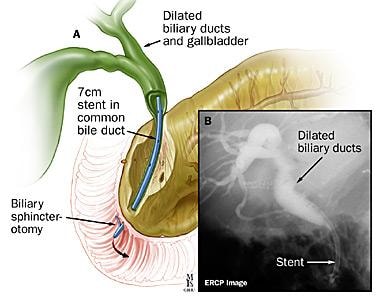
Biliary stenting is a test which allows the doctor to look directly at the biliary tract and place a stent to maintain bile duct patency. Diagnostic biliary stenting is recommended for bile duct obstruction, jaundice, elevated liver enzymes and as a therapeutic test for biliary strictures and stones. In order to do the test, an endoscope is carefully passed through the mouth into the esophagus, stomach and duodenum. The endoscope is a long flexible tube, about the thickness of your index finger, with a bright light at its tip. The video camera on the endoscope transmits images of the biliary tract to a monitor allowing the physician to examine the bile ducts checking for any disease or abnormalities. If necessary, biliary stents can be placed through the scope during biliary stenting to maintain duct patency. Tissue samples (biopsies) can be taken during the procedure as well.
Diagnosis
Biliary stenting can help doctors diagnose the reasons for
Jaundice and dark urine
Elevated liver enzymes and bilirubin
Bile duct obstruction on imaging
Biliary strictures on cholangiography
To evaluate abnormalities in the biliary system in other imaging like ultrasound and CT scan
Unexplained abdominal pain
Cholangitis and biliary infection
Diagnosis and surveillance of biliary complications
Biliary stenting can also detect strictures, obstructions and anatomic abnormalities. The procedure is used to look for early signs of biliary pathology in patients with jaundice or elevated liver function tests. The doctor can also take samples from abnormal-looking tissues during biliary stenting. The procedure allows diagnosis of biliary disease and placement of therapeutic stents.
Cholangiography: Direct visualization of the bile ducts is obtained that will help to diagnose obstruction, strictures and anatomic variations especially in patients with post-surgical anatomy.
Manometry: is a modality when applied with biliary stenting can help to assess sphincter of oddi pressure and ductal compliance so that therapeutic stent placement is optimized.
Treatment
Biliary stenting can help doctors with the following issues
Relief of bile duct obstruction from strictures
Relief of biliary obstruction from stones
Palliation of malignant bile duct obstruction
Treatment of post-surgical biliary complications
Prevention of cholangitis in obstructed bile ducts
Temporary stenting for benign strictures with planned removal
Long-term stenting for unresectable malignancy
Maintenance of bile flow to prevent jaundice and liver damage
Interventions
Plastic stent placement: temporary stent placed in bile duct for benign obstruction
Metal stent placement: long-term stent placed for malignant obstruction
Covered metal stent placement: stent with plastic coating to prevent tumor ingrowth
Uncovered metal stent placement: stent without coating for stricture dilation
Multiple stent placement: several stents placed in tandem for complex strictures
Stent removal and replacement: previously placed stents removed and new stents inserted
Stent dilation: stent deployed using balloon to optimize patency
Cholangioplasty: bile duct dilated during stent placement for stricture relief
Preventive
Bile duct obstruction surveillance: biliary obstruction is common in high-risk patients. Surveillance is recommended in patients with biliary strictures or malignancy to detect obstruction in the early stage which may help in endoscopic treatment avoiding surgery.
Surveillance of patients with benign strictures: Patients with post-surgical or primary sclerosing cholangitis strictures are prone to develop recurrent obstruction which can be prevented by biliary stenting combined with periodic stent exchange.
Early detection and stenting of strictures followed by monitoring: Early detection and stenting of biliary strictures prevents cholangitis, jaundice and liver damage significantly.
Malignancy palliation in advanced disease: Patients with unresectable pancreatic cancer or cholangiocarcinoma can undergo biliary stenting for symptomatic relief and improved quality of life.
Book an Appointment
+91 8788982544
Locate us
Gondwana Square, Nagpur
siddiqui.amin10@gmail.com