
Endoscopic biopsy
Endoscopic biopsy in Nagpur
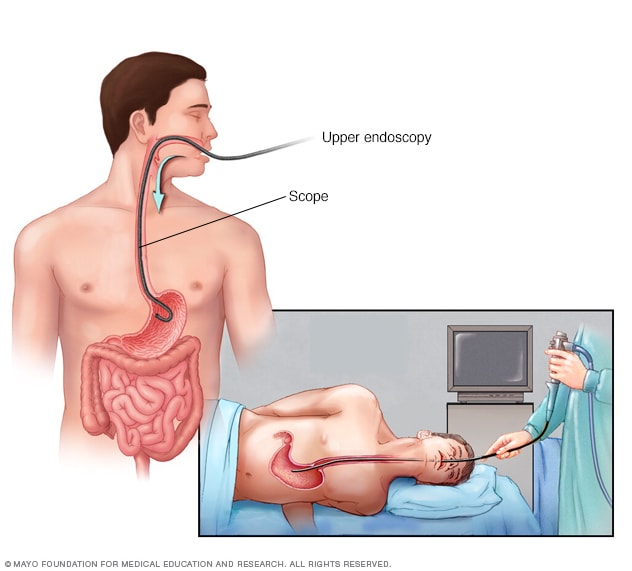
Endoscopic biopsy is a test which allows the doctor to look directly at the gastrointestinal tract lining and obtain tissue samples for microscopic examination. Diagnostic endoscopic biopsy is recommended for suspected gastric cancer, lymphoma, infection confirmation and inflammatory disorders. In order to do the test, an endoscope is carefully passed through the mouth into the esophagus, stomach and duodenum or through the anus into the colon. The endoscope is a long flexible tube, about the thickness of your index finger, with a bright light at its tip. The video camera on the endoscope transmits images of the gastrointestinal tract to a monitor allowing the physician to examine the lining and identify abnormal areas. If necessary, tissue samples can be obtained through the scope during endoscopic biopsy for microscopic examination. Multiple biopsies can be taken during the procedure to increase diagnostic accuracy.
Diagnosis
Endoscopic biopsy can help doctors diagnose the reasons for
Suspected gastric cancer or ulcers
Suspicious lesions or nodules on endoscopy
Chronic inflammation or ulceration
Diagnosis of gastric lymphoma or malignancy
H. pylori infection confirmation
Celiac disease or tropical sprue assessment
Inflammatory bowel disease confirmation
Diagnosis and staging of gastrointestinal malignancy
Endoscopic biopsy can also determine the exact nature of lesions seen during endoscopy. The procedure is used to confirm diagnosis of cancer, infections, and inflammatory conditions. The doctor can also take multiple samples from different sites during endoscopic biopsy. The procedure allows the pathologist to later examine the tissue with a microscope for signs of disease, malignancy, or infection.
Rapid urease test: Biopsy tissue is tested immediately during endoscopy that will help to diagnose H. pylori infection in real time especially in patients with peptic ulcer disease or chronic gastritis.
Immunohistochemistry: is a modality when applied with endoscopic biopsy tissue can help to identify specific cell markers and confirm diagnosis of lymphoma or malignancy so that treatment planning is accurate.
Treatment
Endoscopic biopsy can help doctors with the following issues
Confirmation of gastric cancer diagnosis for surgical planning
Identification of lymphoma type for chemotherapy selection
Detection of H. pylori infection for eradication therapy
Diagnosis of celiac disease for dietary management
Confirmation of inflammatory bowel disease for appropriate treatment
Assessment of dysplasia severity in Barrett’s esophagus
Staging of gastrointestinal malignancy for treatment selection
Identification of infectious organisms for targeted antimicrobial therapy
Interventions
Multiple site biopsy: tissue samples obtained from multiple areas to increase diagnostic accuracy
Targeted biopsy: biopsy obtained from specific abnormal areas identified during endoscopy
Rapid urease test: immediate H. pylori detection performed during endoscopy for real-time diagnosis
Brush biopsy: gentle brushing technique used for fragile or bleeding lesions
Large piece biopsy: adequate tissue obtained for comprehensive histopathology analysis
Immunohistochemistry staining: special staining performed on tissue for marker identification
Flow cytometry: tissue analysis for hematologic malignancy detection
Culture biopsy: tissue cultured for identification of organisms and antibiotic susceptibility
Preventive
Gastric cancer screening biopsy: gastric cancer is common in Asian countries. Biopsy is recommended in high-risk patients with suspicious lesions to confirm diagnosis in the early stage which may help in endoscopic treatment avoiding surgery.
Surveillance biopsy in Barrett’s esophagus: Patients with long-standing Barrett’s esophagus are prone to develop esophageal cancer which can be screened by endoscopy combined with targeted biopsy from areas of dysplasia.
Early detection and diagnosis of premalignant lesions followed by treatment: Early biopsy confirmation of premalignant lesions allows appropriate intervention to prevent malignant transformation.
Infectious disease biopsy diagnosis: Patients with suspected infectious colitis, gastritis or malabsorption can be diagnosed by endoscopic biopsy identifying specific organisms for targeted treatment.
Book an Appointment
+91 8788982544
Locate us
Gondwana Square, Nagpur
siddiqui.amin10@gmail.com