
Fibroscan
- Upper GI Endoscopy
- Colonoscopy
- ERCP
- Endoscopic Variceal Ligation
- Endoscopic Sclerotherapy
- Hemoclip Application
- Endoscopic Balloon Dilatation
- Fibroscan
- Biliary stenting
FIBROSCAN (TRANSIENT ELASTOGRAPHY) IN NAGPUR
What is Fibroscan?
Fibroscan is a non-invasive diagnostic test that measures liver stiffness using transient elastography technology. The procedure assesses the degree of liver fibrosis without requiring liver biopsy. Fibroscan uses ultrasound-based technology to determine tissue elasticity and correlate it with fibrosis stage. This advanced diagnostic tool has revolutionized liver disease assessment by providing accurate, safe, and patient-friendly fibrosis staging.
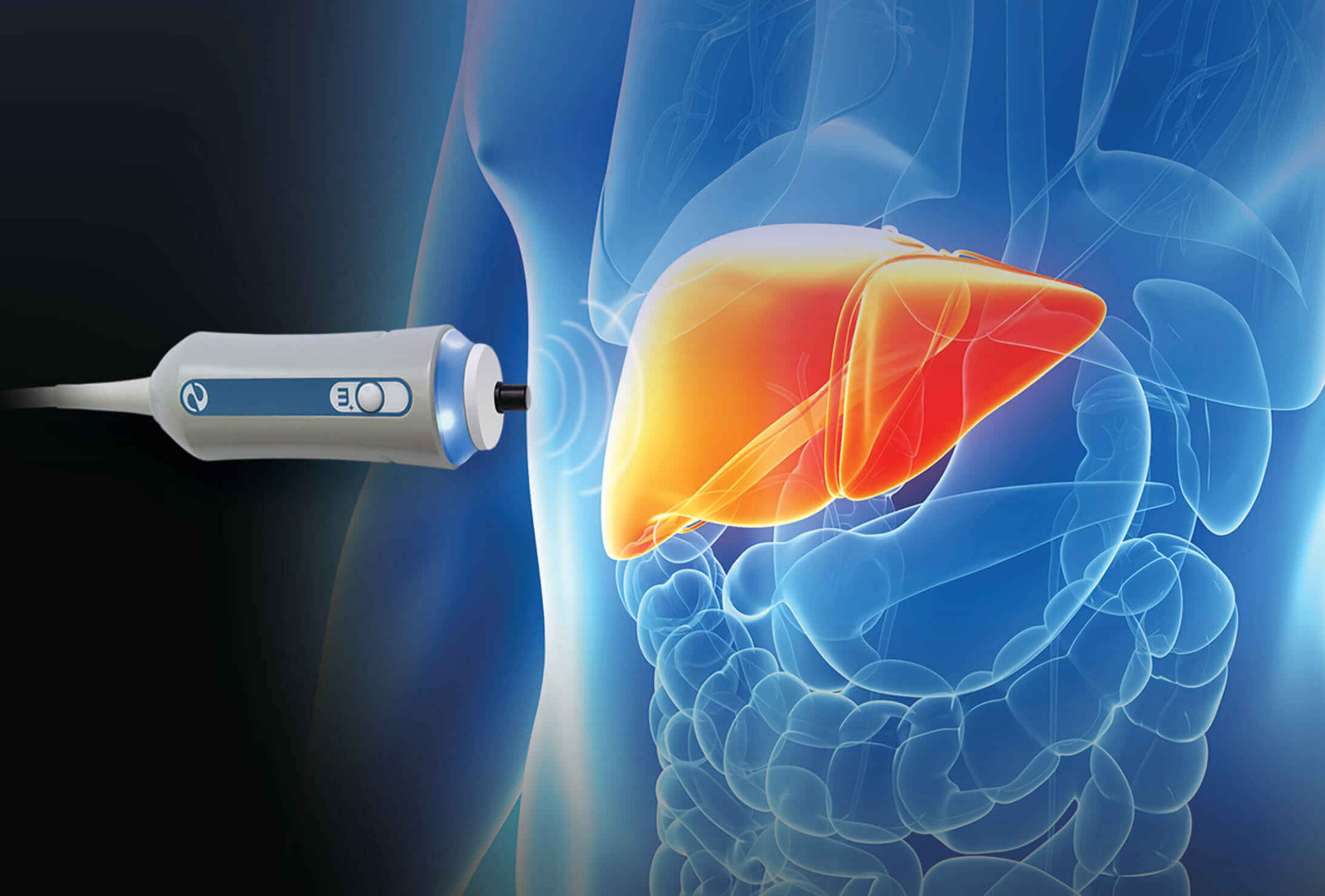
Dr. K. Amin Siddiqui’s fibroscan department performs one of the largest numbers of transient elastography procedures per year in Nagpur by experts in the field. Fibroscan is a non-invasive test which allows the doctor to assess liver stiffness and predict fibrosis degree without biopsy. Diagnostic fibroscan is recommended for suspected liver fibrosis, fatty liver disease, viral hepatitis and as a surveillance test for cirrhosis risk patients. In order to do the test, a specialized ultrasound probe is placed over the right intercostal space. The probe is a small handheld device with a transducer that transmits ultrasound waves into the liver. The device measures the speed of wave transmission through liver tissue to assess stiffness. If necessary, tissue fibrosis stage is determined through the scope during fibroscan to guide treatment decisions. Multiple measurements are taken during the procedure to ensure accuracy.
Why Fibroscan Matters
Liver fibrosis is a silent disease that progresses without obvious symptoms until advanced stages. Early detection of fibrosis allows for timely intervention to prevent progression to cirrhosis and hepatocellular carcinoma. Fibroscan enables physicians to identify patients at risk and implement appropriate treatment strategies. The test is particularly valuable for patients with fatty liver disease, viral hepatitis, and alcoholic liver disease where fibrosis assessment guides management decisions.
Non-invasive fibrosis assessment has transformed liver disease management by reducing reliance on liver biopsy. Fibroscan provides accurate staging of liver fibrosis, identifies disease progression, and predicts clinical outcomes. Regular fibroscan monitoring helps track disease progression and assess treatment efficacy. This technology has become essential in modern hepatology practice for comprehensive liver disease evaluation.
Fibroscan Procedure Explained
Fibroscan (transient elastography) is a simple ultrasound-based procedure that takes 5-10 minutes. The patient lies supine with the right arm abducted for access to the liver. The ultrasound probe is placed over the right intercostal space, typically between ribs 8 and 10. The device emits ultrasound pulses and measures the speed of elastic wave transmission through liver tissue.
The speed of wave propagation correlates with tissue stiffness measured in kilopascals (kPa). Stiffer fibrotic livers show faster wave speed, while normal soft livers show slower wave speed. Results are displayed on the device screen with success rate percentage. The procedure is painless, non-invasive, and has no contraindications or side effects.
Multiple measurements (typically 10) are obtained from different liver regions to ensure representative sampling. The median value is reported as the liver stiffness. Quality parameters including interquartile range (IQR) and success rate determine result reliability. Reliable results show success rate >60% and IQR/median <0.30, ensuring accurate fibrosis assessment.
Fibroscan Results and Fibrosis Staging
Fibroscan results are expressed as liver stiffness in kilopascals (kPa), ranging from 2.5 to 75 kPa. The measurement correlates with histological fibrosis stage on METAVIR scale. Normal liver stiffness is typically <5.5 kPa. Results are interpreted as follows:
F0-F1 (No/Minimal Fibrosis): <6.0 kPa – Normal liver with no significant fibrosis
F2 (Significant Fibrosis): 6.0-8.0 kPa – Moderate fibrosis present, risk of progression
F3 (Advanced Fibrosis): 8.0-12.0 kPa – Extensive fibrosis, cirrhosis risk increased
F4 (Cirrhosis): >12.0-15.0 kPa – Established cirrhosis with risk of complications
Values >15 kPa indicate definite cirrhosis with portal hypertension. Precise cutoff values vary depending on underlying liver disease etiology. Different thresholds apply for NAFLD, viral hepatitis B, hepatitis C, and alcoholic liver disease. Dr. Siddiqui interprets results considering clinical context, laboratory findings, and imaging studies.
Fibroscan vs. Liver Biopsy
Liver biopsy is the historical gold standard for fibrosis assessment but carries significant risks. Fibroscan offers numerous advantages over invasive biopsy. Biopsy is painful, requires anesthesia, carries risks of bleeding and infection, and samples only small liver area. Fibroscan is non-invasive, painless, assesses entire liver, has no complications, and provides rapid results.
Fibroscan has sensitivity >90% and specificity >85% for significant fibrosis detection. The test accurately predicts cirrhosis with excellent accuracy comparable to biopsy. Fibroscan avoids biopsy risks including hemorrhage, bile duct perforation, and organ injury. Patient preference strongly favors fibroscan due to safety and comfort. Fibroscan has replaced biopsy in most clinical scenarios for non-invasive fibrosis assessment.
Indications for Fibroscan
Fibroscan is indicated for patients with suspected liver fibrosis from various etiologies. Common indications include:
Suspected NAFLD (non-alcoholic fatty liver disease) with imaging evidence of steatosis
Chronic hepatitis B infection requiring fibrosis staging for treatment decisions
Chronic hepatitis C infection prior to antiviral therapy or post-treatment assessment
Alcoholic liver disease with risk of cirrhosis requiring fibrosis staging
Autoimmune hepatitis or primary biliary cholangitis requiring fibrosis assessment
Family history of cirrhosis or hepatocellular carcinoma requiring surveillance
Abnormal liver function tests of unclear etiology requiring liver disease evaluation
Pre-transplant evaluation in patients with advanced liver disease
Post-transplant monitoring in liver transplant recipients
Obesity with suspected fatty liver disease requiring fibrosis risk stratification
Dr. Siddiqui recommends fibroscan as first-line investigation for fibrosis assessment in all these clinical scenarios.
Fibroscan in Specific Liver Diseases
NAFLD (Non-Alcoholic Fatty Liver Disease)
Fibroscan is essential for NAFLD risk stratification. Stiffness >7 kPa suggests advanced fibrosis with cirrhosis risk. Combined with FIB-4 score, fibroscan identifies patients requiring closer monitoring and intervention. Patients with normal fibroscan can be reassured and managed with lifestyle modifications alone. Regular fibroscan follow-up (every 1-2 years) monitors disease progression in high-risk patients.
Chronic Hepatitis B
Fibroscan guides treatment decisions in chronic hepatitis B. Patients with F2-F3 fibrosis benefit from antiviral therapy to prevent cirrhosis. Normal fibroscan in HBeAg-negative patients may defer treatment. Post-treatment fibroscan monitoring assesses treatment response and predicts clinical outcomes. Fibroscan has reduced need for biopsy in HBV management.
Chronic Hepatitis C
Fibroscan predicts treatment need and identifies cirrhosis in hepatitis C. Patients with F3-F4 fibrosis have priority for direct-acting antiviral (DAA) therapy. SVR (sustained virologic response) assessment includes post-treatment fibroscan. Regression of fibrosis is common after SVR, indicating treatment efficacy.
Alcoholic Liver Disease
Fibroscan assesses alcoholic liver disease severity independently of alcohol use. Abstinence results in fibrosis regression monitored by serial fibroscans. Patients with significant fibrosis require close monitoring and treatment of complications. Fibroscan guides decisions for hospitalization and intensive management.
Advantages of Fibroscan
Fibroscan offers multiple advantages over conventional biopsy. The test is completely non-invasive with no needle insertion or anesthesia. Patient comfort is excellent as there is zero pain during the procedure. Reproducibility is excellent with low intra- and inter-observer variability. Fibroscan provides rapid results within minutes of the test.
The test assesses the entire liver rather than small biopsy sample. Complications are absolutely zero as there is no tissue damage. The test is repeatable allowing serial assessment of disease progression. Cost is moderate compared to biopsy with hospitalization costs. Fibroscan is accessible and available in most centers now.
Quality control parameters ensure result reliability. Success rate percentage indicates sampling adequacy. IQR/median ratio <0.30 indicates good result quality. Results can be obtained regardless of obesity or ascites in many cases. Fibroscan has revolutionized non-invasive liver disease assessment.
Limitations of Fibroscan
Despite advantages, fibroscan has some limitations. Results may be unreliable in extreme obesity (BMI >40) requiring XL probe. Ascites can prevent reliable measurement due to fluid interference. Failure rate is higher in patients with significant ascites. Recent large meal may affect results requiring fasting.
Results may overestimate fibrosis in acute hepatitis with inflammation. Cholestasis may increase stiffness independent of fibrosis. Results require interpretation considering clinical context and laboratory findings. Fibroscan cannot assess necroinflammatory activity or differentiate etiology. Integration with other markers (FIB-4, APRI scores) improves accuracy.
Fibroscan Protocol at Dr. Amin’s Center
Dr. Siddiqui follows standardized fibroscan protocol ensuring accuracy. Patient fasts 2 hours prior to examination. Right arm abduction provides optimal intercostal access. 10 measurements taken from different liver regions. Median value calculated with quality parameters reported.
Results interpreted with clinical correlation and laboratory findings. FIB-4 score (using age, AST, platelet count) calculated. APRI score (AST-to-platelet ratio) calculated for hepatitis patients. Combined non-invasive scores optimize accuracy. Serial fibroscans scheduled based on results and disease risk.
Fibroscan Pricing and Availability
Fibroscan is affordable and accessible at Dr. Siddiqui’s centers. Cost is significantly less than liver biopsy. Most insurance plans cover fibroscan testing. Package rates available for multiple procedures. Same-day testing without appointment delays.
Safety and Contraindications
Fibroscan is absolutely safe with zero complications. No contraindications exist for the procedure. Even pregnant patients can undergo fibroscan safely. Pacemaker patients can safely undergo fibroscan. No radiation exposure occurs. No sedation required. Immediate return to normal activities possible.
Preparation for Fibroscan
Minimal preparation required for fibroscan. Fast for 2 hours before the test. Wear loose clothing allowing right chest exposure. Avoid large meals immediately before testing. Relax for 5 minutes before the procedure. Remove jewelry from the abdomen and chest.
Post-Fibroscan Care
No restrictions after fibroscan procedure. Immediate return to normal activities possible. No pain or discomfort expected after testing. Results available immediately or within 24 hours. Follow-up consultation with Dr. Siddiqui to discuss results. Treatment plans based on fibrosis stage determined.
Fibroscan Follow-up Schedule
Follow-up intervals depend on baseline fibroscan results. Normal results: repeat in 2-3 years for surveillance. F1-F2 fibrosis: repeat in 1-2 years to monitor progression. F3 fibrosis: repeat in 6-12 months due to cirrhosis risk. F4 cirrhosis: repeat in 6 months and screen for complications. More frequent follow-up if treatment initiated.
Combined Non-Invasive Fibrosis Assessment
Dr. Siddiqui uses combination approach for optimal fibrosis assessment. Fibroscan combined with FIB-4 score improves accuracy. APRI score calculation using AST and platelets. Enhanced liver fibrosis (ELF) test if available. Combined approach identifies all fibrosis stages accurately.
FIB-4 score = (Age × AST) / (Platelet count × ALT^0.5). Scores <1.30 indicate low cirrhosis risk. Scores >2.67 indicate high cirrhosis risk. Fibroscan confirms results and determines exact fibrosis stage. Integration of multiple markers guides optimal clinical decisions.
Book an Appointment
+91 8788982544
Locate us
Gondwana Square, Nagpur
siddiqui.amin10@gmail.com