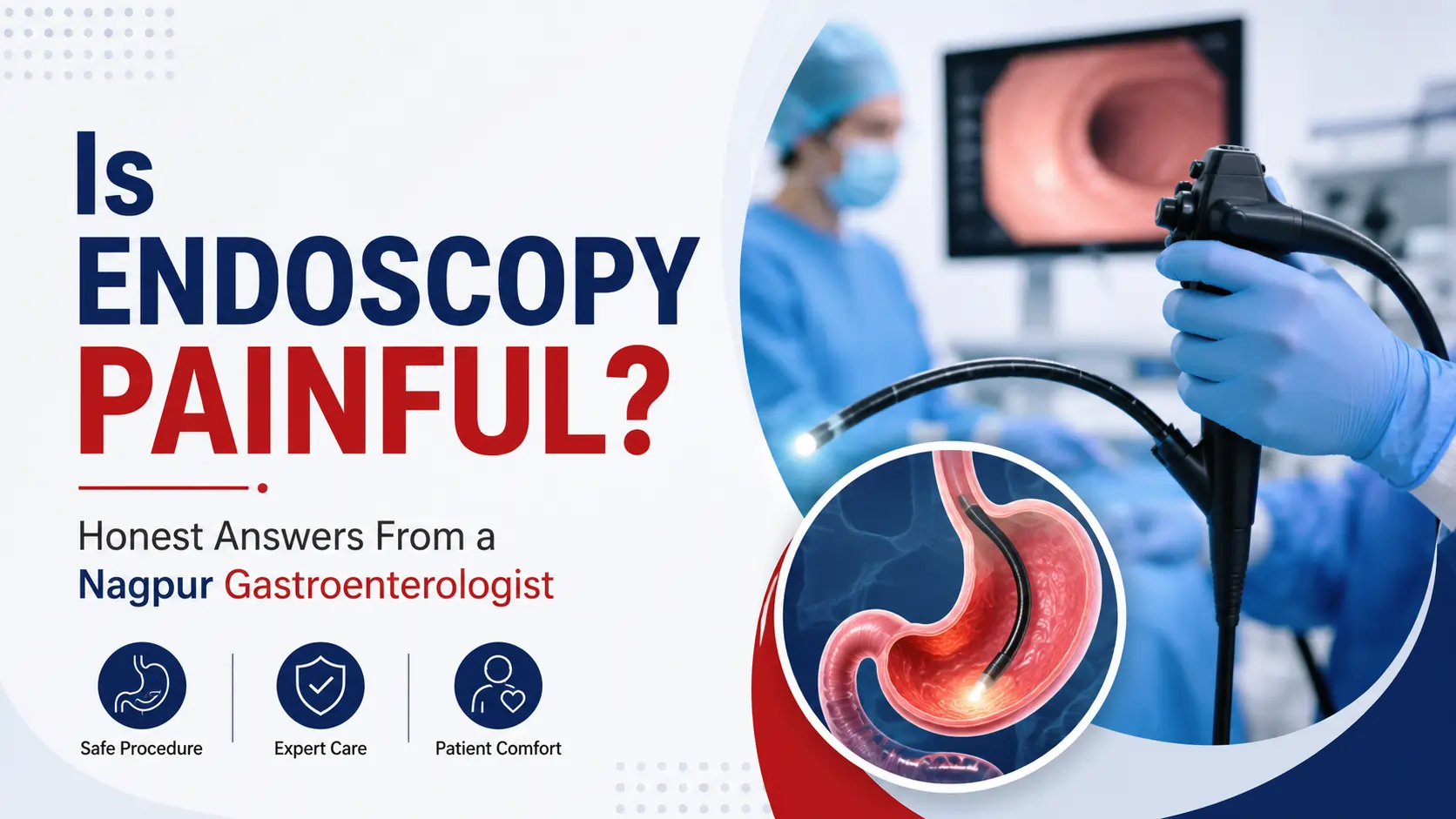
Is Endoscopy Painful? A Nagpur Gastroenterologist Answers Honestly
Introduction
If your doctor has recommended an endoscopy, your first thought is probably this: “Is endoscopy painful?” You’re not alone. Many patients feel anxious before the procedure because they imagine discomfort, pain, or complications.
The good news? Modern endoscopy is usually quick, safe, and far less uncomfortable than most people expect.
As a trusted Gastroenterologist in Nagpur, Dr. Amin Siddiqui regularly helps patients understand what really happens during an endoscopy and how modern techniques make the experience smooth and manageable.
In this guide, we’ll answer the common question — is endoscopy painful — honestly and clearly, while also explaining what to expect before, during, and after the procedure.
What Is an Endoscopy?
An endoscopy is a medical procedure that allows a gastroenterologist to examine the digestive tract using a thin, flexible tube with a tiny camera attached to it. This instrument is called an endoscope.
The procedure helps diagnose conditions affecting the:
- Food pipe (esophagus)
- Stomach
- Small intestine
- Colon
- Rectum
Doctors commonly recommend endoscopy for symptoms such as:
- Acid reflux
- Stomach pain
- Difficulty swallowing
- Vomiting
- Bloating
- Unexplained weight loss
- Gastrointestinal bleeding
According to the American Society for Gastrointestinal Endoscopy, endoscopy is one of the safest and most effective diagnostic procedures for digestive disorders.
Is Endoscopy Painful?
The honest answer is: Most patients do not experience pain during an endoscopy.
However, some people may feel:
- Mild discomfort
- Pressure
- Temporary bloating
- A slight gagging sensation
In most cases, sedation or anesthesia is used to help patients stay relaxed and comfortable throughout the procedure.
So when patients ask Dr. Amin Siddiqui, “Is endoscopy painful?” the answer is usually:
“It may feel slightly uncomfortable, but it is generally not painful.”
Modern endoscopy technology and sedation methods have made the procedure much easier than it was years ago.
What Does an Upper GI Endoscopy Feel Like?
An upper GI endoscopy examines the upper digestive tract.
Before the procedure:
- Your throat may be sprayed with a local anesthetic
- You may receive mild sedation through an IV
During the test, most patients feel:
- Sleepy or relaxed
- Mild pressure in the throat
- Brief discomfort when swallowing the scope
The procedure typically lasts only 5 to 15 minutes.
Many patients barely remember the procedure afterward because of the sedative medication.
Is Colonoscopy More Painful Than Endoscopy?
A colonoscopy is another type of endoscopic procedure used to examine the large intestine.
Patients often ask whether colonoscopy hurts more than upper endoscopy.
The reality is:
- Both procedures are generally well tolerated
- Sedation significantly reduces discomfort
- Colonoscopy may cause temporary cramping or bloating
Still, severe pain is uncommon.
An experienced specialist like Dr. Amin Siddiqui ensures patient comfort throughout the procedure.
Why Some People Feel Discomfort During Endoscopy
Although endoscopy is usually painless, discomfort levels can vary depending on several factors:
1. Anxiety
Fear and stress can make patients more sensitive to discomfort.
2. Gag Reflex
Some patients naturally have a stronger gag reflex.
3. Lack of Sedation
Minimal sedation may allow patients to feel more sensations during the test.
4. Existing Digestive Conditions
Inflammation or ulcers can sometimes increase sensitivity.
How Sedation Makes Endoscopy Comfortable
One major reason why patients no longer fear endoscopy is sedation.
Depending on your condition, the doctor may use:
- Mild sedation
- Conscious sedation
- Deep sedation
Sedation helps:
- Reduce anxiety
- Minimize discomfort
- Relax muscles
- Prevent gagging
Most patients feel drowsy and relaxed rather than awake and uncomfortable.
How to Prepare for an Endoscopy
Proper preparation can make the procedure smoother and more comfortable.
Before the Procedure
Your doctor may advise you to:
- Avoid eating for 6–8 hours
- Stop certain medications temporarily
- Arrange someone to drive you home
Wear Comfortable Clothing
Loose-fitting clothes can help you feel more relaxed during recovery.
Inform Your Doctor About Medical Conditions
Tell your gastroenterologist if you have:
- Diabetes
- Heart disease
- Allergies
- Bleeding disorders
Good preparation reduces complications and improves comfort.
What Happens During the Procedure?
Here’s a step-by-step overview:
Step 1: Sedation
You’ll receive medication to help you relax.
Step 2: Scope Insertion
The endoscope is gently inserted through the mouth or rectum, depending on the procedure.
Step 3: Internal Examination
The camera sends images to a monitor so the doctor can examine your digestive tract.
Step 4: Tissue Sampling (If Needed)
Tiny tissue samples (biopsies) may be taken painlessly.
Step 5: Recovery
Patients rest briefly before going home.
The entire process is usually fast and safe.
Is Endoscopy Painful After the Procedure?
After the test, patients may experience:
- Mild sore throat
- Temporary bloating
- Gas
- Mild fatigue from sedation
These symptoms typically disappear within a few hours.
Severe pain after endoscopy is rare. However, contact your doctor immediately if you experience:
- Fever
- Vomiting
- Severe abdominal pain
- Bleeding
- Difficulty breathing
Benefits of Endoscopy
Endoscopy is not just safe — it can also detect serious conditions early.
Benefits include:
- Early diagnosis of digestive diseases
- Detection of ulcers and inflammation
- Identification of cancers
- Removal of polyps
- Biopsy collection
- Treatment of bleeding
Early diagnosis often leads to better treatment outcomes.
Common Myths About Endoscopy
Myth 1: Endoscopy Is Extremely Painful
Reality: Most patients feel little to no pain.
Myth 2: The Procedure Takes Hours
Reality: Most endoscopies take under 15 minutes.
Myth 3: Recovery Takes Days
Reality: Many people return to normal activities within 24 hours.
Myth 4: Sedation Is Dangerous
Reality: Sedation is generally safe when administered by trained professionals.
When Should You See a Gastroenterologist?
You should consult a specialist if you experience:
- Persistent acidity
- Difficulty swallowing
- Blood in stool
- Chronic abdominal pain
- Frequent vomiting
- Unexplained weight loss
Early evaluation can prevent serious complications.
If you are searching for an experienced Gastroenterologist in Nagpur, Dr. Amin Siddiqui provides expert diagnosis and advanced digestive care.
Questions Patients Ask Me About Gut Problems
Recent Post